PhD Programs in Marketing: Complete Guide to Doctoral Studies, Career Paths, and Top Programs

Introduction
A PhD in Marketing prepares scholars for careers in academic research, teaching, and thought leadership. These rigorous doctoral programs develop expertise in consumer behavior, marketing strategy, quantitative methods, and theoretical frameworks shaping marketing practice and knowledge.
This comprehensive guide explains what marketing PhD programs entail, admission requirements, top programs, career outcomes, and how to decide if pursuing a marketing doctorate aligns with your goals.
Primary Keyword: PhD programs in marketing Secondary Keywords: Marketing PhD, doctoral programs marketing, marketing doctorate, PhD marketing programs Keyword Clusters: Program requirements, top schools, career paths, application process.

What is a PhD in Marketing?
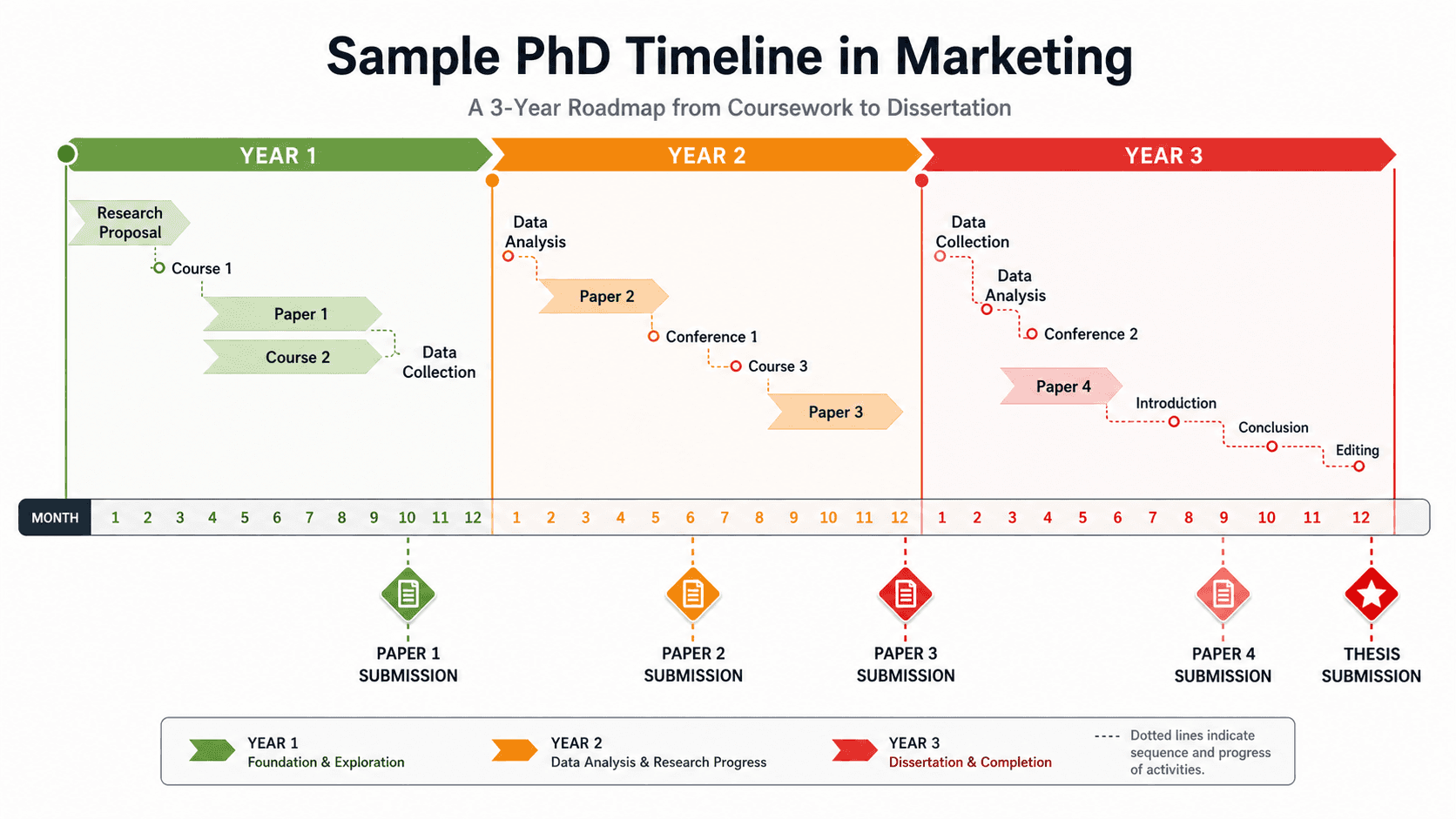
A Doctor of Philosophy in Marketing is a research-focused terminal degree typically requiring 4-6 years of full-time study. Unlike professional degrees (MBA), PhDs emphasize original research, theoretical contributions, and preparation for academic careers.
Core Components:
Coursework (1-2 years): Advanced marketing theory, research methods, statistics, specialized seminars
Comprehensive Exams: Written and oral exams demonstrating mastery of field
Dissertation Research (2-4 years): Original research contributing new knowledge to marketing
Teaching Experience: Serving as teaching assistant or instructor
Publications: Publishing research in academic journals
Goal: Develop independent researchers who advance marketing knowledge and educate future marketers.
PhD vs. Other Marketing Degrees
PhD vs. MBA: PhD: Research focus, academic careers, theory and methods, 4-6 years, often funded MBA: Practice focus, business careers, applied knowledge, 2 years, tuition paid
PhD vs. DBA (Doctor of Business Administration): PhD: Theory development, academic focus, full-time typically, younger students DBA: Applied research, executive careers, part-time often, experienced professionals
PhD vs. Master's in Marketing: PhD: Original research, professor track, comprehensive training, longer duration Master's: Applied skills, industry careers, specialized knowledge, 1-2 years
Core Curriculum Areas
Consumer Behavior
Psychology of decision-making, attitude formation and change, motivation and emotion, social influence, neuroscience applications
Marketing Strategy
Competitive positioning, branding, segmentation and targeting, new product development, pricing strategy
Quantitative Methods
Econometrics, experimental design, structural equation modeling, machine learning applications, Bayesian methods
Research Methods
Survey design, experimental methods, qualitative research, field studies, data collection techniques
Specialized Topics
Digital marketing, marketing analytics, international marketing, services marketing, retail strategy
Top PhD Programs in Marketing
Tier 1 Programs (Global Recognition):
Stanford Graduate School of Business
Strengths: Consumer behavior, behavioral economics
Selective: ~2-3 students annually
Funding: Full tuition + stipend
MIT Sloan School of Management
Strengths: Marketing analytics, digital marketing
Quantitative focus
Strong industry connections
Wharton School, University of Pennsylvania
Strengths: Consumer behavior, marketing strategy
Large cohorts, diverse research
Extensive resources
Northwestern Kellogg School of Management
Strengths: Consumer behavior, branding
Collaborative environment
Strong placement record
Harvard Business School
Strengths: Marketing strategy, consumer insights
Small program, elite placement
Extensive case method exposure
Tier 2 Programs (Excellent Reputation):
Columbia, Chicago Booth, UCLA Anderson, Duke Fuqua, Michigan Ross, Berkeley Haas, NYU Stern
Strong Specialized Programs:
University of Florida (digital marketing), Ohio State (consumer behavior), Texas A&M (marketing analytics)

Admission Requirements
Academic Background:
Strong quantitative skills (statistics, calculus), research experience preferred, bachelor's or master's degree, excellent GPA (3.5+ typically)
Standardized Tests:
GRE/GMAT scores (varies by program, some waiving requirements), TOEFL/IELTS for international students
Application Materials:
Statement of purpose (research interests and goals), writing sample or research proposal, 3 letters of recommendation (academic preferred), CV/resume, transcripts
Ideal Candidates:
Strong analytical abilities, demonstrated research potential, clear research interests, intellectual curiosity, excellent communication skills
Competitive Statistics: Top programs: 2-5% acceptance rates, average GRE: 165+ quantitative, 160+ verbal
Funding and Financial Support
Standard Packages Include:
Full tuition waiver, stipend ($25,000-$40,000 annually), health insurance, research and conference funding
Funding Sources:
University fellowships, research assistantships, teaching assistantships, external grants and scholarships
Financial Considerations:
PhDs typically fully funded at reputable programs, unfunded offers signal less competitive programs, opportunity cost (foregone salary 5+ years), modest lifestyle during program
External Funding Opportunities:
NSF Graduate Research Fellowship, NDSEG Fellowship, industry-sponsored scholarships, university-specific fellowships

Career Paths for Marketing PhDs
Academic Careers (Most Common):
Tenure-Track Professor (80% of graduates): Research universities, teaching universities, business schools, starting salary: $120,000-$200,000+ at research institutions
Responsibilities: Teaching, research, service, publishing requirements, tenure decision (5-7 years)
Industry Research Careers:
Tech Companies: Google, Meta, Amazon research scientist roles ($150,000-$300,000+)
Consulting: McKinsey, BCG, Bain specialized practices ($150,000-$250,000+)
Market Research Firms: Nielsen, Ipsos, Kantar senior research roles ($100,000-$180,000)
Corporate Research: Fortune 500 consumer insights and analytics ($120,000-$200,000)
Non-Academic Careers:
Policy research, government agencies, nonprofit research organizations, think tanks, entrepreneurship
Placement Rates: Top programs: 95%+ placement in desired positions, majority in tenure-track academic roles, increasing industry options
The Dissertation Process
Choosing Topic:
Identify research gap, consult with advisor, literature review, feasibility assessment, contribution potential
Dissertation Committee:
Chair/advisor (primary mentor), 3-5 committee members, expertise areas covered, approval at milestones
Key Stages:
Proposal (Year 3): Research question, literature review, methodology, expected contributions
Data Collection (Years 3-4): Execute research plan, iterate based on findings
Writing (Years 4-5): Multiple paper format typical, revision cycles, committee feedback
Defense (Year 5): Oral presentation, committee questions, final revisions, approval
Timeline: 2-4 years from proposal to defense typical
Day-to-Day Life as a PhD Student
Typical Week:
Coursework and seminars (15-20 hours early years), research (20-30 hours), teaching duties (10-15 hours if TA), reading and studying (15-20 hours), seminars and workshops (5-10 hours)
Research Activities:
Literature reviews, data collection and analysis, writing papers, conference presentations, collaborating with faculty
Social and Professional:
Cohort bonding, academic conferences, departmental events, research workshops, job market preparation
Challenges:
Intellectual demands, long hours, work-life balance, stress and pressure, isolation periods, career uncertainty
Rewards:
Intellectual stimulation, autonomy, passionate colleagues, contributing to knowledge, teaching opportunities
Application Strategy
Timeline:
2 years before: Gain research experience, strengthen quantitative skills 1 year before: Prepare for GRE/GMAT, identify programs and faculty, draft materials Fall: Submit applications (December-January deadlines typically) Spring: Interviews (January-March), receive decisions (March-April)
Research Fit:
Study faculty research interests, identify potential advisors, reference specific faculty in statement, demonstrate knowledge of program strengths
Statement of Purpose:
Articulate clear research interests, explain PhD motivation, demonstrate preparation, fit with program, future goals
Recommendation Letters:
Choose recommenders who know you well, academic references strongest, provide them context, follow up respectfully
Is a Marketing PhD Right for You?
Good Fit If You:
Love research and discovery, excited by theory and methods, want to contribute to knowledge, enjoy teaching, value autonomy and intellectual freedom, comfortable with uncertainty
Poor Fit If You:
Primarily motivated by money, want immediate impact, dislike research process, prefer applied over theoretical work, need structured career path
Key Questions:
Do you genuinely enjoy reading academic papers? Can you handle delayed gratification (5+ years)? Are you passionate about specific research questions? Do alternative careers (industry) appeal more? Can you handle rejection and criticism?
Self-Assessment:
Work as research assistant, read marketing journals, talk to current PhD students, consider master's degree first, evaluate opportunity costs honestly
Frequently Asked Questions
How long does a marketing PhD take? Typically 4-6 years full-time. Coursework and exams: 2 years. Dissertation: 2-4 years. Timeline varies by program, research topic, and individual progress.
Can I work while pursuing a PhD? Not recommended. PhDs are demanding full-time commitments. Most programs prohibit outside employment beyond limited teaching. Some executive DBA programs allow working professionals.
What GPA and test scores do I need? Top programs: 3.7+ GPA, 165+ GRE quantitative, 160+ verbal. However, holistic review considers research potential, fit, and experience beyond numbers.
Should I get a master's degree first? Not required but can help. Master's provides research experience, clarifies interests, strengthens application. Some enter directly from bachelor's successfully.
How competitive are admissions? Highly competitive at top programs: 2-5% acceptance rates. Hundreds apply for 2-5 spots. Strong research potential and fit with faculty essential.
What if I want to work in industry after? Perfectly acceptable but may face skepticism during admissions. Some programs more industry-friendly. PhD provides unique research skills valuable in tech, consulting, analytics roles.
Conclusion
PhD programs in Marketing prepare scholars for careers advancing marketing knowledge through research and education. These rigorous 4-6 year programs develop expertise in theory, methods, and specialized marketing domains while providing teaching experience and professional development.
Pursuing a marketing doctorate requires passion for research, intellectual curiosity, comfort with uncertainty, and commitment to long-term goals over immediate earnings. The rewards intellectual autonomy, contributing to knowledge, shaping future marketers appeal to those valuing academic pursuits.
If you're considering a marketing PhD, gain research experience, strengthen quantitative skills, identify research interests, study programs and faculty carefully, and honestly assess fit between doctoral training and your goals. The decision to pursue a PhD is significant approaching it thoughtfully ensures alignment between the investment and your aspirations.
For those committed to research and knowledge creation, a marketing PhD opens doors to rewarding academic careers at leading universities or specialized research roles in industry. The journey is challenging but profoundly fulfilling for those genuinely passionate about advancing marketing science.

Timeframe
2022 - 2023
Client
Escoba Inc.