What is a Distribution Channel? Definitions and Types for Business Success
What is a Distribution Channel? Definitions and Types for Business Success
Introduction
Distribution channels determine how products and services flow from manufacturers to end customers. These pathways whether direct sales, retail partnerships, wholesalers, or digital platforms fundamentally impact market reach, profit margins, customer experience, and competitive positioning.
Understanding distribution channel options, selecting appropriate channels for your business, and managing channel relationships strategically separates successful market penetration from distribution failures. This guide explains distribution channel types, selection criteria, management strategies, and emerging trends shaping how products reach customers.
Primary Keyword: Distribution channel Secondary Keywords: Distribution channels types, channel strategy, distribution methods, supply chain distribution Keyword Clusters: Channel types, selection criteria, management strategies, digital distribution
What is a Distribution Channel?

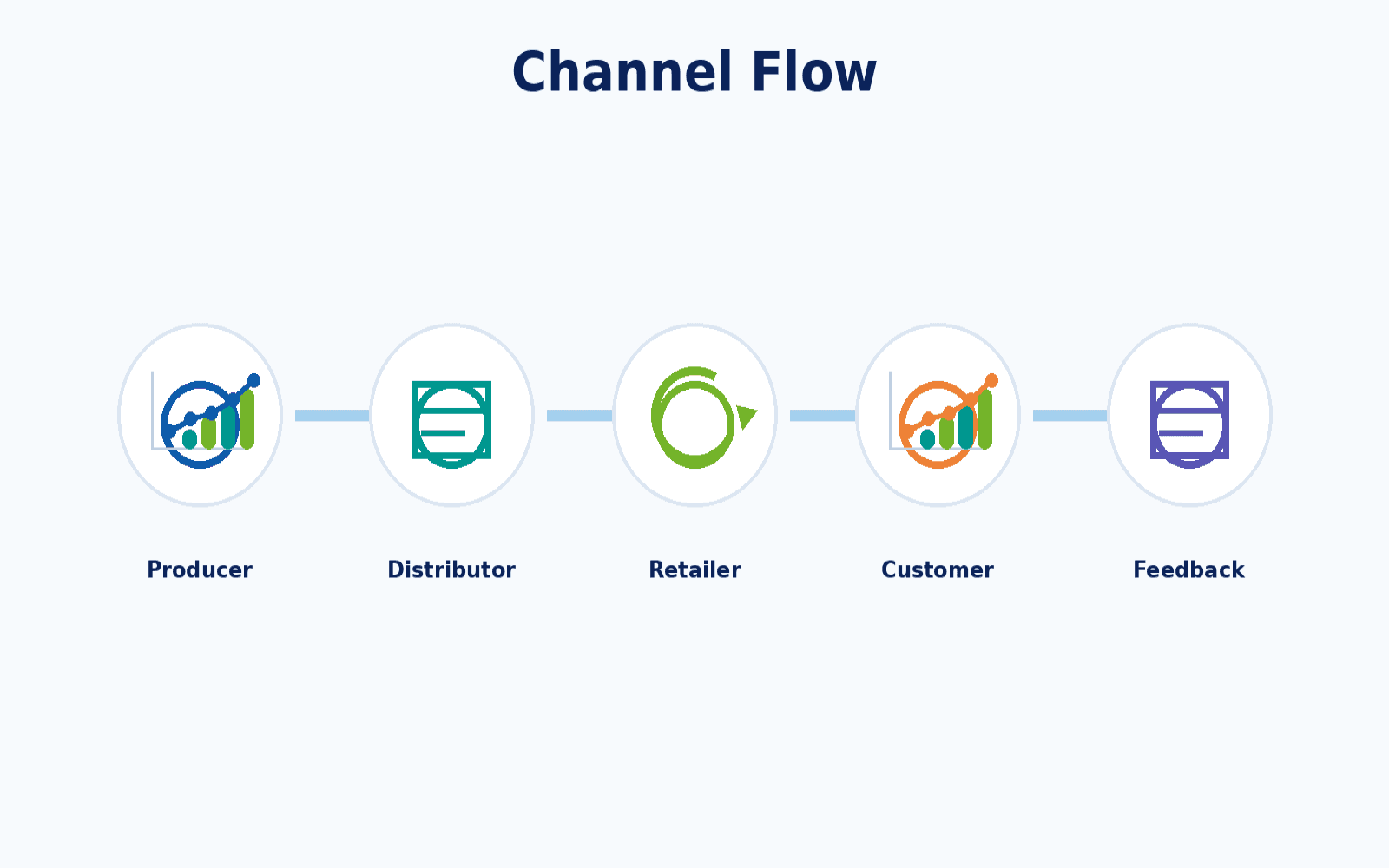
A distribution channel is the path products or services take from producer to end customer, including all intermediaries involved in the process. Channels encompass physical distribution, ownership transfer, payment flows, and information exchange.
Key Components
Producers/Manufacturers: Create products or services Intermediaries: Wholesalers, distributors, retailers, agents End Customers: Final consumers or business users Supporting Functions: Logistics, warehousing, financing, marketing
Channel Functions
Information gathering about customers and markets, promotion and selling to target audiences, negotiation on price and terms, physical distribution and logistics, financing inventory and operations, risk assumption for unsold inventory.
Types of Distribution Channels
Direct Distribution (Zero-Level Channel)
Producer sells directly to customers without intermediaries.
Examples
Tesla selling cars through company stores
SaaS companies selling software online
Farmers markets
D2C e-commerce brands
Advantages: Higher profit margins, complete control over customer experience, direct customer relationships and data, faster market feedback.
Disadvantages: Requires significant capital for infrastructure, limited geographic reach, higher customer acquisition costs, demands diverse expertise.
Best For: High-margin products, complex solutions requiring consultation, brands prioritizing customer relationships, digital products and services.
Indirect Distribution
Products pass through one or more intermediaries before reaching customers.
One-Level Channel (Retailer)
Producer → Retailer → Consumer
Examples: Grocery stores, department stores, specialty retail shops
Advantages: Broader geographic reach, retailers handle customer acquisition, reduced distribution complexity, shared marketing costs.
Disadvantages: Lower margins, less control over presentation, retailer dependence, limited customer data access.
Two-Level Channel (Wholesaler + Retailer)
Producer → Wholesaler → Retailer → Consumer
Examples: Consumer packaged goods, clothing brands, hardware products
Advantages: Massive distribution scale, wholesalers handle logistics, capital efficiency, risk distribution.
Disadvantages: Lowest margins, minimal brand control, multiple intermediary dependencies, customer relationship distance.
Three-Level Channel (Agent/Broker)
Producer → Agent → Wholesaler → Retailer → Consumer
Examples: International trade, complex B2B products, specialized markets
Advantages: Market expertise from agents, reduced market entry barriers, relationship leverage, geographic expansion.
Disadvantages: Additional cost layer, complexity in management, limited control, communication challenges.
Specialized Distribution Channel Types
Dual Distribution
Using multiple channels simultaneously to reach different customer segments.
Example: Nike sells through own stores, website, and retail partners like Foot Locker.
Advantages: Maximum market coverage, segment-specific optimization, risk diversification, revenue source variety.
Challenges: Channel conflict management, pricing consistency, resource allocation complexity.
Reverse Distribution
Channels for product returns, recycling, or disposal flowing from customer back to producer.
Examples: Product returns, recycling programs, trade-in programs, remanufacturing.
Growing Importance: Sustainability focus, circular economy models, regulatory requirements, customer expectations.
Hybrid Distribution
Combining direct and indirect channels with clear differentiation.
Example: B2B software selling direct to enterprise while using resellers for SMB market.
Strategy: Segment by customer size, geography, or product complexity to minimize channel conflict.
Digital Distribution Channels
Online pathways delivering products or services electronically.
Types
E-commerce platforms (Amazon, own website)
Digital marketplaces (App stores, Steam)
Subscription services (Netflix, Spotify)
Download platforms (software, media)
Advantages: Low distribution costs, global reach instantly, easy scaling, rich customer data, rapid deployment.
Omnichannel Distribution
Integrated approach providing seamless experience across all channels online, mobile, physical stores.
Requirements: Unified inventory systems, consistent pricing and promotions, cross-channel customer data, flexible fulfillment options (BOPIS, ship-from-store).
Example: Target allowing online ordering with in-store pickup, returns anywhere, consistent experience across touchpoints.
Selecting the Right Distribution Channel
Product Characteristics
Perishability: Perishable goods need short, fast channels (direct or one-level).
Complexity: Complex products requiring explanation suit direct or limited intermediaries.
Value: High-value items justify direct sales economics.
Bulk/Weight: Heavy products benefit from intermediary logistics expertise.
Market Factors
Customer Preferences: B2C often prefers retail convenience; B2B may want direct relationships.
Geographic Dispersion: Widespread customers require intermediary reach.
Purchase Frequency: High-frequency purchases suit retail channels.
Market Size: Large markets justify dedicated distribution infrastructure.
Company Resources
Financial Capital: Direct distribution requires significant investment.
Management Expertise: Channel management demands specific capabilities.
Market Knowledge: Unfamiliar markets benefit from intermediary expertise.
Control Preference: Desire for brand control favors direct channels.
Competitive Environment
Industry Norms: Some industries have established channel expectations.
Competitive Positioning: Differentiate through unique channel strategies.
Market Power: Strong brands can dictate channel terms better.
Managing Distribution Channels
Partner Selection
Evaluate potential partners on market coverage, financial stability, expertise and reputation, complementary capabilities, alignment with brand values.
Relationship Management
Clear communication of expectations, regular performance reviews, collaborative planning, conflict resolution mechanisms, mutual benefit focus.
Channel Conflict Resolution
Types of Conflict
Horizontal: Between same-level intermediaries
Vertical: Between different channel levels
Multi-channel: Between different channel types
Resolution Strategies
Clear territory or segment definition
Differential pricing by channel
Distinct product variations
Transparent policies and enforcement
Performance Measurement
Track sales volume and growth, market share by channel, profitability by channel, customer satisfaction, inventory turnover, payment terms compliance.
Motivation and Support
Provide training and education, marketing support and materials, financial incentives and promotions, technology and tools, exclusive products or territories.
Emerging Distribution Trends
Direct-to-Consumer (D2C) Growth
More brands bypassing traditional retail for direct customer relationships, enabled by e-commerce platforms and digital marketing, provides better margins and customer data.
Subscription Models
Recurring delivery transforming distribution economics, creates predictable revenue and customer relationships, applicable across product categories.
Social Commerce
Selling directly through social media platforms, Instagram Shopping, Facebook Marketplace, TikTok Shop, integrates discovery and purchase seamlessly.
Marketplace Dominance
Amazon, Walmart.com, and specialized marketplaces becoming primary channels, provides instant reach but intense competition and fee pressure.
Fulfillment Innovation
Same-day delivery, drone delivery testing, micro-fulfillment centers, ship-from-store capabilities, changing customer expectations and distribution requirements.
Sustainable Distribution
Carbon-neutral shipping options, electric delivery vehicles, packaging reduction, circular economy integration, responding to environmental concerns.
Frequently Asked Questions
What's the difference between distribution channels and supply chains? Supply chain encompasses entire product flow from raw materials through production to customer. Distribution channels are the customer-facing portion of supply chain how finished products reach end users.
How many distribution channels should a business use? Depends on market coverage goals, resources, and channel conflict management capability. Start with one channel, prove viability, then expand strategically to reach different segments or geographies.
Can businesses change distribution channels later? Yes, but transitions require careful planning. Exiting retail partnerships while building direct channels creates conflict. Phased transitions with clear communication minimize disruption.
What is channel conflict and how do you prevent it? Conflict arises when different channels compete for same customers. Prevent through clear territory definition, segment-specific channels, differential pricing, or distinct product variations per channel.
Are direct distribution channels always more profitable? Not necessarily. Higher margins offset by customer acquisition costs, logistics expenses, and infrastructure investments. Calculate total cost and profitability per channel including all factors.
How do you measure distribution channel effectiveness? Track revenue and profit by channel, market penetration and coverage, customer acquisition cost, customer satisfaction, channel partner performance, inventory efficiency, and overall ROI.
Conclusion
Distribution channels fundamentally determine market reach, profitability, and competitive positioning. Selecting appropriate channels requires analyzing product characteristics, market factors, company resources, and competitive dynamics. No single channel suits all situations optimal strategies match channel types to specific business contexts.
Direct distribution offers control and margins but requires significant investment. Indirect channels provide reach and efficiency but reduce margins and control. Most successful businesses use multiple channels strategically, managing them to minimize conflict while maximizing coverage.
Emerging trends D2C growth, digital marketplaces, subscription models, omnichannel integration continue reshaping distribution landscapes. Businesses must adapt channel strategies as customer preferences and enabling technologies evolve.
Begin by clearly defining your distribution objectives, evaluating channel options against selection criteria, starting with one primary channel, measuring performance rigorously, and expanding strategically based on results. Effective distribution channel management creates competitive advantages through superior market access, customer experience, and operational efficiency.
Timeframe
2022 - 2023
Client
Escoba Inc.